
• A
  • A
  • A
  • ABC
  • ABC
  • ABC
  • А
  • А
  • А
  • А
  • А
Regular version of the site
Article
Assessing Sustainable Development Through Wavelet-Quantile Based Analysis: Comparative Insights From Four Developed Countries

Çelik A., Veselitskaya N., Damrah S.

Sustainable Development. 2026. Vol. 34. No. S2. P. 1274-1301.

Article
Evaluating Delphi survey accuracy in transportation: Evidence from Japanese technology foresight

Niyazov S., Maibakh O., Alexei Sukharev et al.

Technological Forecasting and Social Change. 2026. Vol. 224.

Book chapter
Challenges and Risks to the Inclusion of AI for Environmental Applications

Aleksandrova I., Milshina Y.

In bk.: Artificial Intelligence Enabled Real Time Environmental Monitoring. Springer, 2026. Ch. 10. P. 199-229.

Book chapter
Artificial Intelligence and Environmental Decision Support Systems

Daria Gribkova, Milshina Y.

In bk.: Artificial Intelligence Enabled Real Time Environmental Monitoring. Springer, 2026. P. 231-252.

Book chapter
Artificial Intelligence for Urban Planning and Building Smart Cities

Demekhina A., Milshina Y.

In bk.: Artificial Intelligence Enabled Real Time Environmental Monitoring. Springer, 2026. P. 253-281.

Research & Expertise – News

HSE Scientists Identify Effective Models for Training Research Personnel for Industry

HSE Scientists Identify Effective Models for Training Research Personnel for Industry
Experts from the HSE Institute for Statistical Studies and Economics of Knowledge have examined industrial PhD programmes across 19 countries worldwide. The analysis shows that the key components of an effective model include co-funding by universities, industry, and government; dual academic supervision; and flexible intellectual property arrangements. The findings have been published in Foresight and STI Governance.

XXVI April International Academic Conference Kicks Off at HSE University

XXVI April International Academic Conference Kicks Off at HSE University
The conference programme covers five research topics: economics; human capital and society; instrumental methods and models; foresight research; and international research. Hundreds of scientists from around the world will take part in the conference.

Foresight: Methods and Practices

Foresight: Methods and Practices
The HSE Institute for Statistical Studies and Economics of Knowledge (ISSEK) presents the report "Foresight: Methods and Practices." This publication describes, in a simple and user-friendly format, 28 futures studies methods that have been most actively used in recent years in Russian and international foresight projects.

Alexander Sokolov: "Evidence is a Key Aspect in Working with the Future"

Alexander Sokolov: "Evidence is a Key Aspect in Working with the Future"
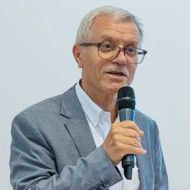
Alexander Sokolov, Deputy Director of the Institute for Statistical Studies and Economics of Knowledge (ISSEK) of the National Research University Higher School of Economics, Head of UNESCO Chair on Future Studies, spoke at Chinese Academy of Science and Technology for Development (CASTED). His presentation focused on artificial intelligence implementation in futures research and growing role of evidence-based approaches in shaping long-term strategies.

Professor of HSE University has delivered keynote speech at inauguration ceremony of the China-BRICS Research Center

Professor of HSE University has delivered keynote speech at inauguration ceremony of the China-BRICS Research Center
At inauguration of the China-BRICS New-Quality Productive Forces Research Center in China Professor Alexander Sokolov, Deputy Director of the HSE University Institute for Statistical Studies and Economics of Knowledge (ISSEK), delivered a presentation on a role of foresight studies in strategic planning. The event took place on March 25, 2026 in Beijing under the Zhongguancun (ZGC) Forum Annual Conference.

Delphi Paradox: New Study Showed Disagreements Intensification Under Expert Surveys

AI generated picture
Researchers from the Higher School of Economics (HSE) have systematically criticized one of the pillars of global technology foresight — the Delphi method. Their study ‘Biases in expert judgements in large-scale S&T Delphi Surveys: How to cope with them?’, published in 2025 in ‘Technological Forecasting and Social Change’ journal, shows that classical expert surveys not only do not guarantee objective consensus achieving but often implicitly reinforce bias and dispersion of opinions. Researchers have proposed supplementing the Delphi survey methodology with built-in “protective mechanisms” against potential distortions.

Top-20 Trends in OceanTech Area

Top-20 Trends in OceanTech Area
HSE University Institute for Statistical Studies and Economics of Knowledge analyzed trends in ocean technologies using Intelligent FOResight Analytics system iFORA.

Artificial Intelligence Serves Competitive Intelligence

AI generated picture
At the 5th Forum of African Economic Intelligence Associations (Dakhla, Morocco) Prof. Alexander Sokolov, Deputy Director of Institute for Statistical Studies and Economics of Knowledge  spoke how AI can accelerate search methods of futures studies and enhance market and competitor analysis. 

Brazil Accelerates Adoption of Artificial Intelligence

Brazil Accelerates Adoption of Artificial Intelligence
Institute for Statistical Studies and Economics of Knowledge has analyzed the key statements of Brazil’s plan for artificial intelligence (AI) development approved by government, which envisages intensifying of research and training highly qualified personnel as well as AI technology implementation expanding in main industries.

The Dynamics of Science Diplomacy: Bridging Pragmatism and Idealism

The Dynamics of Science Diplomacy: Bridging Pragmatism and Idealism
A new seminar series, "The Dynamics of Science Diplomacy: Bridging Pragmatism and Idealism," began in the fall of 2025. According to the seminar's coordinators, Irek Suleymanov (HSE University, Russia) and Parsifal Islas -Morales (UNAM, Mexico), these sessions are intended not only to serve as a meeting place for emerging researchers in science diplomacy with authoritative experts in the field, but also as a learning and research laboratory for the vibrant research initiatives of undergraduate and graduate students from around the world.