• A
  • A
  • A
  • ABC
  • ABC
  • ABC
  • А
  • А
  • А
  • А
  • А
Regular version of the site
Article
Assessing Sustainable Development Through Wavelet-Quantile Based Analysis: Comparative Insights From Four Developed Countries

Çelik A., Veselitskaya N., Damrah S.

Sustainable Development. 2026. Vol. 34. No. S2. P. 1274-1301.

Article
Evaluating Delphi survey accuracy in transportation: Evidence from Japanese technology foresight

Niyazov S., Maibakh O., Alexei Sukharev et al.

Technological Forecasting and Social Change. 2026. Vol. 224.

Book chapter
Challenges and Risks to the Inclusion of AI for Environmental Applications

Aleksandrova I., Milshina Y.

In bk.: Artificial Intelligence Enabled Real Time Environmental Monitoring. Springer, 2026. Ch. 10. P. 199-229.

Book chapter
Artificial Intelligence and Environmental Decision Support Systems

Daria Gribkova, Milshina Y.

In bk.: Artificial Intelligence Enabled Real Time Environmental Monitoring. Springer, 2026. P. 231-252.

Book chapter
Artificial Intelligence for Urban Planning and Building Smart Cities

Demekhina A., Milshina Y.

In bk.: Artificial Intelligence Enabled Real Time Environmental Monitoring. Springer, 2026. P. 253-281.

Tag "research projects" – News

Experts of HSE ISSEK Foresight Centre Shared Best Practices in Long-Term Forecasting and Using the AI-Platform iFORA with the Government of Dubai Representatives

Dubai
Experts HSE ISSEK Foresight Centre introduced approaches to long-term forecasting and iFORA AI-platform capabilities to the Department of Finance for the Government of Dubai representatives. The parties discussed Foresight methods and big data analysis application to strategic planning in financial sector.

Technology Foresight Methods for Identifying Future Competencies Were Discussed in Malaysia

Technology Foresight Methods for Identifying Future Competencies Were Discussed in Malaysia
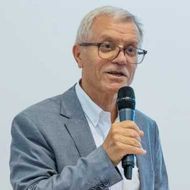
Alexander Sokolov, Director of the International Research and Educational Foresight Centre at the HSE Institute for Statistical Studies and Economics of Knowledge (ISSEK) and Head of UNESCO Chair on Future Studies, presented HSE’s extensive experience and cutting-edge methodological solutions in Foresight-studies on emerging technologies and workforce competencies at the Malaysia National Engineering Convention 2026.

The AI ​​and Data Research Landscape

The AI ​​and Data Research Landscape
The HSE University Institute for Statistical Studies and Economics of Knowledge (ISSEK) has analyzed how research agenda of AI and data has evolved since 2010 and which areas form its core.

Top 20 Frontiers of Global Science: 2025

Top 20 Frontiers of Global Science: 2025
Using big data mining system iFORA, the HSE Institute for Statistical Studies and Economics of Knowledge (ISSEK) has identified the key global scientific topics for 2025, along with associated promising technologies and products.

‘HSE University Provides Students with a Springboard into a World of Opportunities’

‘HSE University Provides Students with a Springboard into a World of Opportunities’
In 2024, Ikenna Mbata, from Owerri, Nigeria, enrolled on the Master’s in Science, Technology and Innovation Management and Policy at ISSEK in Moscow. After two years of studies, on June 1, 2026 he successfully defended his master’s thesis ‘The Spatial Distribution of Pharma Start-ups in Africa: An Analysis of Innovation Clusters and Policy Drivers.’ In his interview with the HSE News Service, Ikenna speaks about his research topic, the role of HSE University in shaping his skills, the importance of volunteering, and the benefits of studying in an international environment.

AI Changes Everything: Fractures of Global Transformations

AI Changes Everything: Fractures of Global Transformations
Artificial intelligence (AI) significant impacts on the economy and society, touching on a wide range of areas, from strategic management and decision-making to everyday communication. Experts from the HSE Institute for Statistical Studies and Economics of Knowledge (ISSEK) used the iFORA system to map key fractures —areas where changes have already become irreversible and will only intensify.

Delphi Paradox: New Study Showed Disagreements Intensification Under Expert Surveys

AI generated picture
Researchers from the Higher School of Economics (HSE) have systematically criticized one of the pillars of global technology foresight — the Delphi method. Their study ‘Biases in expert judgements in large-scale S&T Delphi Surveys: How to cope with them?’, published in 2025 in ‘Technological Forecasting and Social Change’ journal, shows that classical expert surveys not only do not guarantee objective consensus achieving but often implicitly reinforce bias and dispersion of opinions. Researchers have proposed supplementing the Delphi survey methodology with built-in “protective mechanisms” against potential distortions.

Brazil Accelerates Adoption of Artificial Intelligence

Brazil Accelerates Adoption of Artificial Intelligence
Institute for Statistical Studies and Economics of Knowledge has analyzed the key statements of Brazil’s plan for artificial intelligence (AI) development approved by government, which envisages intensifying of research and training highly qualified personnel as well as AI technology implementation expanding in main industries.

Top 20 Frontiers of Russian Science: 2024

Top 20 Frontiers of Russian Science: 2024
In the framework of world science structure mapping the HSE University Institute for Statistical Studies and Economics of Knowledge (ISSEK) for the first time has identified the most relevant for Russia research and development topics using a system of intelligent analysis of big data iFORA.

‘An STI-Accelerated and Informed Future is Possible’

‘An STI-Accelerated and Informed Future is Possible’
The Twelfth International Academic Conference ‘Foresight and Science, Technology and Innovation Policy’ is kicking off at HSE University on November 22. Alexander Sokolov, chair of the organising committee, talked to the HSE News Service about the evolution of the foresight agenda. Two of the conference speakers, Ibon Zugasti from Spain and Mlungisi Cele from South Africa, shared some highlights of their research.
1 2